
Devon Wildlife Trust The spotted flycatcher is a medium-sized songbird of open woodland, parks and gardens. It has a relatively long tail, which it flicks while it sits patiently on a perch waiting for a chance to fly out and catch its insect-prey mid-air. During the breeding season, spotted flycatchers can be seen across the UK, but they leave here in August for their wintering grounds in tropical Africa. Passage migrants can be seen in September.
How to Identify
A streaky, greyish-brown bird, the spotted flycatcher is pale underneath, with a streaky crown and breast.
RSPB At first glance, spotted flycatchers might seem dull brownish-grey and, well, a bit boring. It's better to think of them as beautiful in an understated way. Watch them for a short period and you'll be charmed by their fly-catching antics. Spotted flycatchers fly from a high perch, dash out to grab a flying insect and return to the same spot.
https://www.rspb.org.uk/birds-and-wildlife/wildlife-guides/bird-a-z/spotted-flycatcher/
Devon Birds: Search the Devon Birds website for recent sightings of Spotted Flycatchers in Devon.
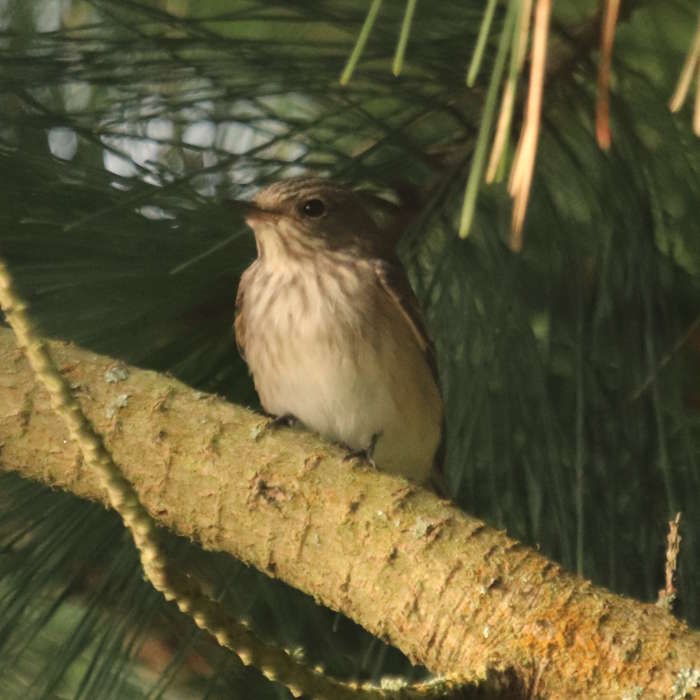
Spotted Flycatcher, Millcombe, Lundy 27th August 2020 photo by Grant Sherman
Wikipedia: The spotted flycatcher (Muscicapa striata) is a small passerine bird in the Old World flycatcher family. It breeds in most of Europe and in the Palearctic to Siberia, and is migratory, wintering in Africa and south western Asia. It is declining in parts of its range.
This is an undistinguished looking bird with long wings and tail. The adults have grey-brown upperparts and whitish underparts, with a streaked crown and breast, giving rise to the bird's common name. The legs are short and black, and the bill is black and has the broad but pointed shape typical of aerial insectivores. Juveniles are browner than adults and have spots on the upperparts.
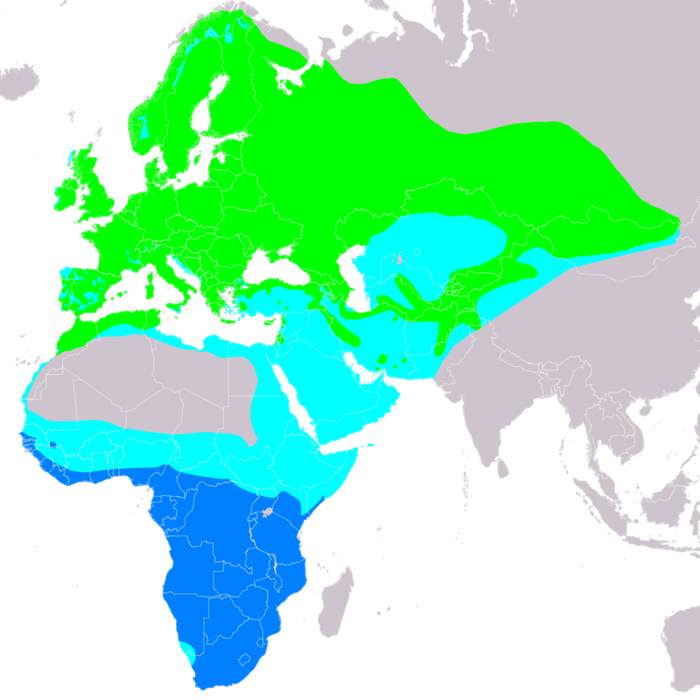
https://commons.wikimedia.org/wiki/File:MuscicapaStriataIUCN2019-3.png
https://en.wikipedia.org/wiki/Spotted_flycatcher
eBird: Fairly common to uncommon summer migrant from winter grounds in Africa. Favours open mixed and deciduous woodland with clearings, parkland, larger gardens, churchyards. Tends to perch rather upright on exposed snags and other perches, sallying out for insects snatched in flight; often returns to the same perch. More easily identified by behaviour than by plumage, which is drab: grayish brown above, dingy whitish below, with dusky streaking on crown and breast.



