How to identify
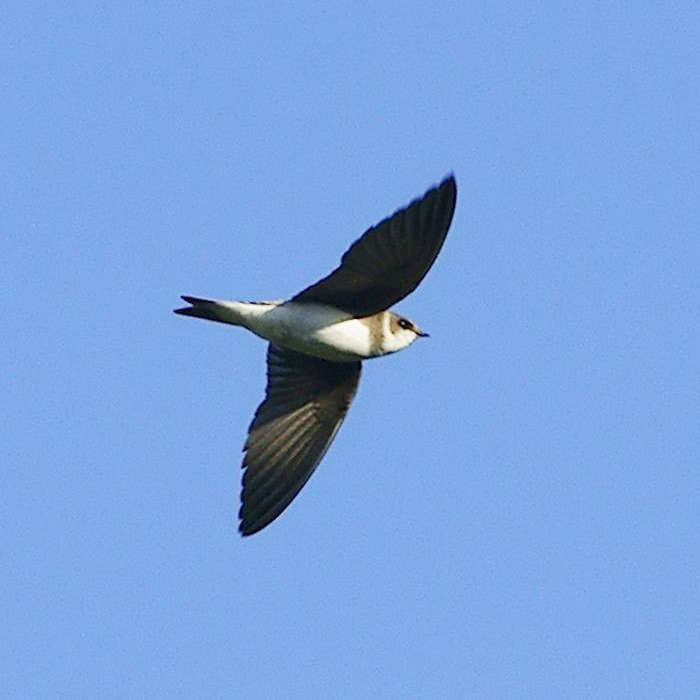
Our smallest swallow, the sand martin is brown above and white below, with a brown band across its breast and a short, forked tail.
RSPB Sand martins are the smallest European hirundines (martins and swallows), with dark brown upper parts and dark under wings contrasting with otherwise pale under parts divided by a distinctive dark chest bar. Agile fliers, feeding mainly over water, they will perch on overhead wires or branches. They are gregarious in the breeding season and winter. During the past 50 years the European population has crashed on two occasions as a result of drought in the birds' African wintering grounds.
https://www.rspb.org.uk/birds-and-wildlife/wildlife-guides/bird-a-z/sand-martin/
Devon Birds Search the Devon Birds website for recent sightings of Sand Martins in Devon.
Devon Biodiversity Record Centre Submit your sightings of Sand Martins and other species in Devon
https://www.dbrc.org.uk/wildlife-sightings/
https://commons.wikimedia.org/wiki/File:Riparia_riparia_-Markinch,_Fife,_Scotland_-flying-8.jpg
https://www.flickr.com/photos/sarniebill/5877040615/
https://commons.wikimedia.org/wiki/File:Riparia_riparia_map.svg
National Biodiversity Network Riparia riparia
The NBN Atlas is a collaborative project that aggregates biodiversity data from multiple sources and makes it available and usable online. It is the UK’s largest collection of freely available biodiversity data.
https://species.nbnatlas.org/species/NHMSYS0000530586
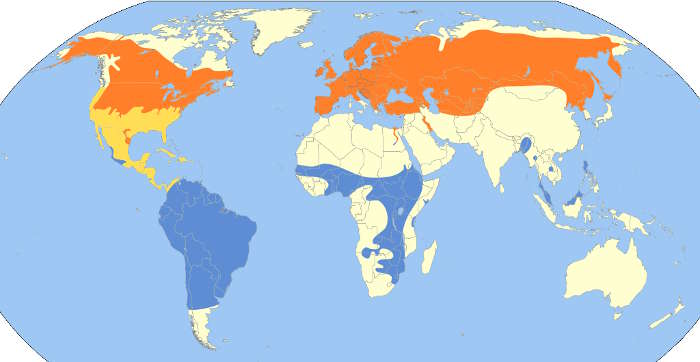
Wikipedia The sand martin (Riparia riparia) or European sand martin, bank swallow, and collared sand martin in India, is a migratory passerine bird in the swallow family. It has a wide range in summer, embracing practically the whole of Europe and the Mediterranean countries and across the Palearctic to the Pacific Ocean. It is a Holarctic species also found in North America. It winters in eastern and southern Africa, South America, and the Indian Subcontinent.
https://en.wikipedia.org/wiki/Sand_martin
eBird Small and compact swallow, with quick flicking wingbeats. Brown above and white below, with a contrasting dark chest band. Note relatively long, notched tail and narrow, pointed wings. Breeds in colonies; builds nest by tunneling into sandbanks. Can be seen over any open habitat including fields, marshes, and ponds, often in mixed flocks with other species of swallows. Fairly common throughout its extensive global range.